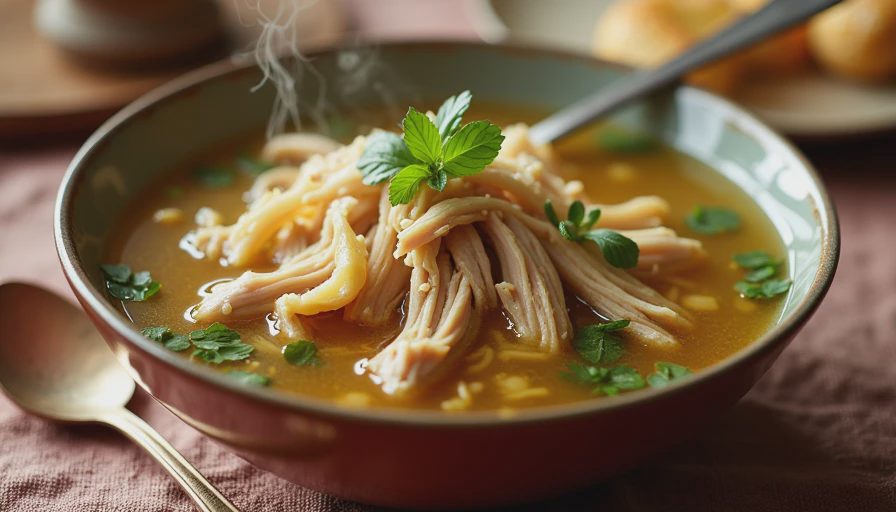
A good chinese chicken broth recipe should make your kitchen smell wonderful without asking you to hunt down a dozen specialty ingredients. This version uses chicken, ginger, garlic, scallions, and a few pantry staples to create a clear, savory broth you can eat as soup, pour over noodles, or use as a base for dinner. It is gentle enough for kids, but has enough depth for adults who want something more interesting than canned soup.
I learned to think about broth in layers during my restaurant kitchen years. The chicken gives you body, the aromatics bring fragrance, and the final seasoning makes everything taste awake. You do not need a giant stockpot or an entire weekend. A medium Dutch oven and about an hour will get you a broth that tastes cared for. Good food should fit real life.
Why this broth tastes better than a shortcut
The first important move is starting with cold water. It gives the chicken time to release flavor gradually and helps you skim away excess foam before the broth turns cloudy. This is not a fussy restaurant trick; it is an easy way to make the finished bowl cleaner and more pleasant.
Use bone-in chicken thighs if you want the most flavor for the money. They are forgiving, stay juicy, and usually cost less than a whole chicken. Chicken wings are another excellent choice because their skin, bones, and connective tissue add body. For a lighter broth, boneless thighs work too, although the result will be less rich.
Ginger and scallions do most of the aromatic work here. Slice the ginger thickly so it can simmer without disappearing, and crush the garlic with the side of your knife instead of mincing it. Large pieces are easier to remove and give the broth a rounded flavor rather than a sharp garlic hit. A small piece of star anise is optional, but it adds a warm background note if your family enjoys it.
Ingredients and easy grocery-store swaps
For about six cups of broth, use two pounds of bone-in chicken thighs or wings, eight cups of cold water, one six-inch piece of ginger, four garlic cloves, four scallions, two tablespoons of low-sodium soy sauce, one teaspoon of kosher salt to start, and one teaspoon of toasted sesame oil. Add a quarter teaspoon of white pepper if you have it. A small carrot or a few slices of yellow onion can add sweetness, but neither is required.
If you only have regular soy sauce, use one tablespoon first and add more at the end. Low-sodium chicken stock can replace part of the water when you are short on time, but choose an unsalted or lightly seasoned carton so the broth does not become salty before the chicken is cooked. Fresh ginger is strongly preferred, though a teaspoon of refrigerated ginger paste is a practical weeknight substitute.
For serving, keep it simple. Cooked rice, thin noodles, baby spinach, bok choy, shredded rotisserie chicken, or frozen corn can all turn this into a complete meal. This chinese chicken broth recipe is also a smart way to use leftover chicken without making the second dinner feel exactly like the first.
How to make the broth step by step
Place the chicken in a pot with the cold water, ginger, garlic, the white parts of the scallions, and the optional carrot or onion. Bring it to a gentle simmer over medium heat. When gray foam gathers on top, skim it off with a spoon. Do not boil hard. A rolling boil can break the chicken apart and churn impurities back into the liquid, while a quiet simmer keeps the broth clearer.
Lower the heat and cook uncovered for 45 to 55 minutes. The chicken should be tender, and the broth should smell savory and aromatic. If the water level drops quickly, your heat is too high; add a splash of water and turn the burner down. This is the part where you can fold laundry, help with homework, or start the rice. Dinner does not need your full attention every second.
Remove the chicken and let it cool until you can handle it. Strain the broth through a fine-mesh strainer into a clean pot or large bowl, then pull the meat from the bones. Discard the bones, ginger, garlic, and cooked scallion pieces. Return the chicken to the strained broth if you are serving immediately, or store the meat separately so it does not soak up all the liquid overnight.
Season only after straining. Stir in the soy sauce, salt, sesame oil, and white pepper. Taste before adding more salt because different soy sauce brands vary considerably. A finished chinese chicken broth recipe should taste savory and rounded, not aggressively salty. If it seems flat, add a teaspoon of soy sauce. If it feels heavy, add a teaspoon of rice vinegar at the table to brighten the bowl.
Turn one pot into several dinners
Serve the broth as a simple soup with scallion greens and a few drops of sesame oil. For a noodle bowl, add cooked wheat noodles or rice noodles directly to each serving, then top with chicken and sliced greens. Keep the noodles separate if you expect leftovers; otherwise they continue absorbing broth and become soft by the next day.
You can also use the broth as a cooking liquid. Simmer rice in a one-to-one mix of broth and water, or use it in place of water for a quick batch of congee. Add shredded chicken, frozen peas, and a beaten egg for a fast lunch. A spoonful of chili crisp gives adults heat without forcing the whole family to eat spicy food.
For a more filling dinner, warm the broth with sliced mushrooms, bok choy, and dumplings from the freezer. This chinese chicken broth recipe gives those convenience ingredients a homemade foundation. The broth does the heavy lifting, so you can make a satisfying meal in about fifteen minutes after the prep work is done.

Storage, reheating, and make-ahead tips
Cool the broth promptly and refrigerate it in shallow containers. It will keep for up to four days in the refrigerator. You can freeze it for about three months in labeled containers, leaving room for expansion. Freeze the chicken separately when possible, especially if you plan to use it in noodles or rice later.
When reheating, bring a serving to a gentle simmer rather than boiling it for a long time. Add fresh scallions, greens, or noodles only after the broth is hot. If a layer of fat solidifies on top in the refrigerator, you can remove some for a lighter soup or stir it back in for more richness. Neither choice is wrong; it depends on the bowl you want.
If you are preparing this chinese chicken broth recipe for meal prep, make the broth on Sunday and portion it into two-cup containers. Label the containers with the date and leave garnishes for serving day. That small bit of organization means a tired Tuesday dinner can become soup, noodles, or rice without starting from zero.
Common questions about this recipe
Can you use a whole chicken? Yes. A small whole chicken will create a generous pot, though you may need a larger Dutch oven and extra water. Simmer until the breast meat is cooked through, remove it, and continue simmering the bones for added flavor.
Can you make it without sesame oil? Absolutely. The broth will still be delicious. Add a little more scallion, a small splash of rice vinegar, or a spoonful of neutral oil at serving time. Sesame oil is a finishing flavor, not the foundation.
Why did my broth turn cloudy? Usually, the heat was too high or the broth was stirred aggressively. Cloudiness does not mean the broth is unsafe or ruined. Strain it carefully and season it well; it will still make excellent soup.
This chinese chicken broth recipe is built to be useful, not precious. Make the first batch exactly as written, then adjust the salt, ginger, or toppings around your household. Once you have a container of this broth in the fridge, weeknight cooking gets noticeably easier.


Travellers Write
No letters yet — be the first traveller to write.