Lo bok is one of those vegetables that looks humble in the produce aisle but earns its place in a busy kitchen. It is crisp, juicy, inexpensive, and much milder than many people expect. You can eat it raw, simmer it in broth, roast it until sweet, or toss it into a fast skillet dinner. If you have seen lo bok at an international grocery store and wondered what to do with it, start here. Good food should fit real life, and this radish is very good at fitting into it.
What lo bok tastes like
Lo bok is a long white radish related to the familiar red radishes sold in bunches. It is often compared with daikon, and the names can overlap depending on the market or region. The flavor is lightly peppery when raw, with a clean, watery crunch. Cooked lo bok becomes softer and sweeter, while the sharp edge settles into the background.
That change is the reason I like it for family dinners. Raw slices can wake up a bowl of noodles or grilled chicken, but cooked pieces are gentle enough for kids who do not want a strong vegetable flavor. The texture also gives you options: thin matchsticks stay crisp, half-moons soften quickly, and thick chunks hold their shape in a long simmer.
Choose firm roots that feel heavy for their size. The skin should be smooth, without deep cracks, mushy patches, or a strong sour smell. A few small blemishes are not a problem. If the leafy tops are attached, look for greens that are perky rather than wilted. The leaves are edible, too, and can be sautéed like other sturdy greens.

How to prep lo bok without making a project
At home, lo bok needs very little work. Rinse the root, trim off the stem and thin root end, and peel only if the skin feels tough or looks rough. Young roots often cook well with the skin left on. For soups and braises, cut the root into one-inch chunks. For stir-fries, slice it into thin half-moons or matchsticks so it cooks in the same short window as your other vegetables.
Here is the kitchen truth: consistent pieces matter more than perfect pieces. If one end of the root is much thicker, cut that section smaller. This keeps the pan from giving you crunchy pieces beside soft ones. For a cold salad, use a box grater or a sharp knife. Salt the shreds lightly, let them stand for ten minutes, then squeeze out extra water. The result stays crisp instead of watering down the dressing.
You can store unwashed lo bok in the refrigerator for about one to two weeks. Remove leafy tops first because they pull moisture from the root. Keep the leaves in a separate bag and use them within a few days. A cut root should be wrapped or placed in an airtight container and used soon, especially if the surface begins to dry.
Easy ways to cook lo bok
The simplest method is a quick skillet braise. Warm a tablespoon of neutral oil in a wide pan, add sliced lo bok, and cook for two or three minutes. Add a splash of water or low-sodium broth, cover, and let it steam until just tender. Finish with soy sauce, rice vinegar, and a few drops of toasted sesame oil. The sauce is small but powerful: salt, brightness, and aroma without turning dinner into a complicated recipe.
For a heartier dish, brown ground pork, chicken, or turkey first. Move the meat to one side, add lo bok with garlic and ginger, then stir everything together with broth. A teaspoon of brown sugar balances the radish, while chili crisp adds heat for adults at the table. Serve the mixture over rice, noodles, or even baked potatoes. This is a useful formula when the refrigerator contains one lonely vegetable and a package of meat.
Roasting works particularly well when you want caramelized edges. Toss thick wedges with oil, salt, and pepper, then roast at 425 degrees Fahrenheit until tender and browned, usually 25 to 35 minutes depending on size. Add lemon juice after roasting. You can also roast lo bok with carrots, sweet potatoes, or broccoli for a simple sheet-pan side.
A weeknight lo bok soup
A quick soup is where lo bok shows its calm, comforting side. Start with chicken or vegetable broth, then add sliced radish, mushrooms, and corn. Simmer until the pieces are tender, about fifteen minutes. Stir in shredded rotisserie chicken or cubed tofu near the end so it warms without becoming tough. Finish with scallions, black pepper, and a small spoonful of chili oil at the table.
If you want more body, add rice noodles, cooked rice, or a beaten egg. Pour the egg slowly into the gently simmering broth while stirring in one direction; it will form soft ribbons. Keep the seasoning balanced rather than aggressively salty. Broth reduces as it cooks, and lo bok releases water, so taste at the end before adding more soy sauce.
This soup also handles leftovers well. Store noodles separately when possible, because they absorb broth overnight. Reheat the soup gently on the stove or in the microwave, adding a splash of water if it has thickened. A handful of fresh greens makes yesterday's pot feel like a new dinner.
Raw lo bok for crunch and contrast
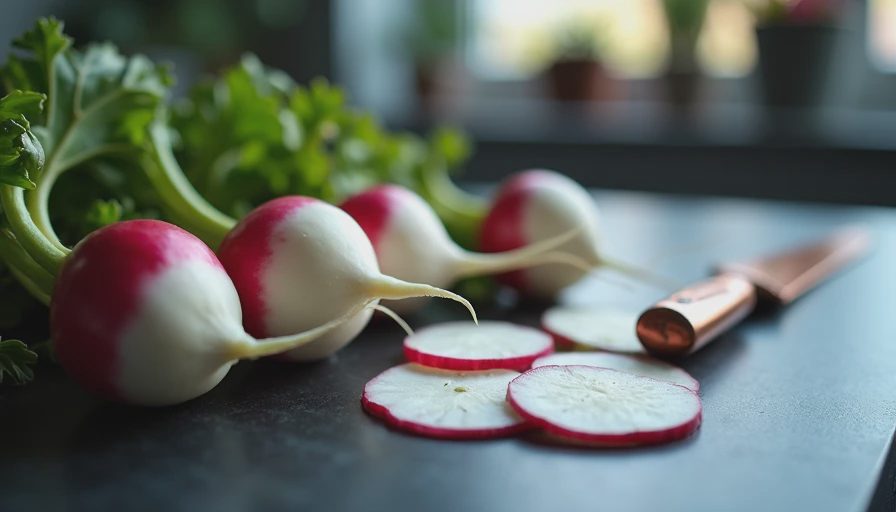
Do not reserve lo bok only for cooked dishes. Thin slices are excellent with rich foods because their crisp texture cuts through fat. Toss matchsticks with rice vinegar, a little sugar, salt, and sesame seeds for a fast refrigerator pickle. Give it at least twenty minutes, or leave it overnight for a softer, more seasoned bite.
A raw lo bok salad can be as simple as shredded radish, cucumber, and carrots with a dressing of lime juice, soy sauce, honey, and neutral oil. Add peanuts for crunch or sliced avocado for richness. This side works next to burgers, grilled salmon, roast chicken, or leftover fried rice. It is also a smart lunch addition because the vegetables stay lively longer than delicate lettuce.
If the raw flavor tastes too sharp, soak the slices in ice water for ten minutes and drain well. That small step cools the bite without cooking the vegetable. You can also mix raw and roasted pieces in the same meal, giving the plate both freshness and sweetness.
Smart substitutions and serving ideas
If a recipe calls for lo bok and your store is out, daikon is the closest substitute. Turnips can work in soups and braises, though they bring a more noticeable earthy flavor. For a quick skillet dish, use a mix of cabbage and carrots when you need volume rather than an exact match. The goal is a balanced dinner, not a produce-aisle scavenger hunt.
One medium root usually gives you several cups of sliced vegetable, enough for a family side plus leftovers. Pair lo bok with steamed rice, a fried egg, dumplings, or simple roasted meat. Keep the flavor mild for children, then put chili crisp, hot sauce, or sliced jalapeños on the table for anyone who wants more heat.
My favorite approach is to buy one root and use it three ways: raw pickle on night one, a skillet braise on night two, and soup with the remaining pieces on night three. That is how a restaurant-kitchen ingredient becomes a practical home-kitchen staple. Prep once, change the texture, and let dinner feel different without starting from zero.
Final kitchen advice
Treat lo bok like a flexible vegetable, not a specialty ingredient that requires a special occasion. Keep the cuts even, season in layers, and taste before adding more salt. High heat brings browning, while covered cooking makes the center tender. Those two ideas will carry you through nearly every preparation.
The next time you see lo bok at the market, choose a firm root and bring it home. Slice a little for crunch, simmer some in broth, and roast the rest if you have room in the oven. A few ordinary ingredients can turn it into a bright side, a filling soup, or a complete weeknight bowl. That is the kind of cooking I trust: flavorful, flexible, and built for real life.



Travellers Write
No letters yet — be the first traveller to write.