Chinese chicken stock is one of those quiet kitchen projects that pays you back all week. A pot made on Sunday can become soup on Monday, fried rice on Tuesday, and a quick noodle dinner when everyone is hungry at 7:15. You do not need a specialty butcher, restaurant equipment, or a long list of hard-to-find ingredients. Good food should fit real life, and this is a very practical way to build flavor.
The goal is a clean, savory broth with enough body to make simple food taste complete. Traditional versions can include whole chickens, feet, ginger, scallions, and other aromatic ingredients. My home-kitchen version keeps the useful parts of that logic while using bones, wings, or leftover roast chicken from a regular grocery store.
What makes the broth taste so good
The best Chinese chicken stock is built in layers. Chicken bones provide savory flavor and gelatin, while ginger brings warmth and scallions add a fresh, onion-like edge. A small amount of Shaoxing wine can add depth, but dry sherry is a workable substitute if that is what you have. Garlic is optional; I use it when the stock is headed for noodles or a stronger soup, but leave it out when I want a more neutral base.
Start with cold water and bring the pot up slowly. This gives the proteins time to rise to the surface, where you can skim them away. The result will not be perfectly clear like a restaurant consommé, and it does not need to be. You are making a useful cooking ingredient, not entering a broth beauty contest.
For about 8 cups of stock, use 2 to 3 pounds of chicken backs, wings, necks, drumsticks, or a leftover carcass. Add one 2-inch piece of ginger, 3 scallions, and 10 cups of water. Keep salt light at the beginning. Unsalted or lightly salted stock is easier to use in sauces, braises, rice, and soup recipes later.
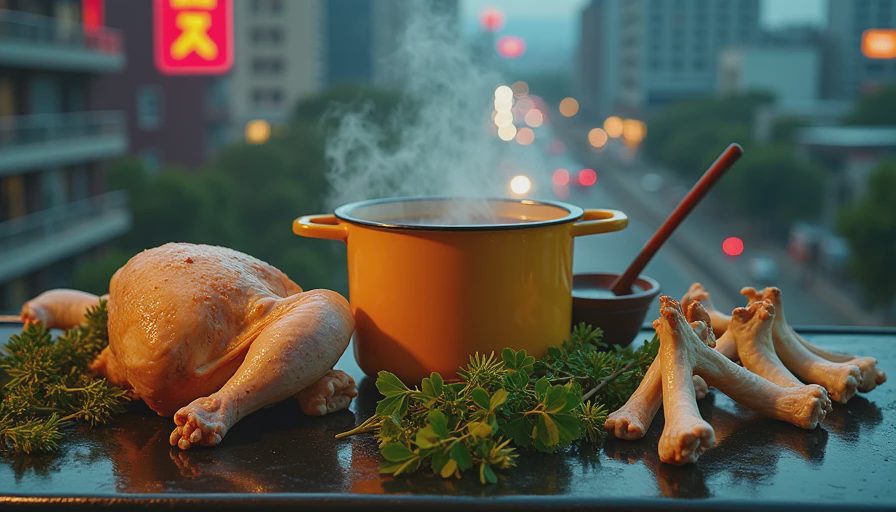
An easy stovetop method
Put the chicken in a large pot and cover it with cold water. Bring the water to a gentle simmer over medium heat, then lower the burner so the surface barely moves. Use a spoon to skim gray foam during the first 20 to 30 minutes. This step matters because a hard boil breaks the impurities into the liquid and can make the broth cloudy and greasy.
Add the ginger and scallions after skimming. Simmer uncovered for 2 to 3 hours, checking occasionally to make sure the liquid has not dropped too far. Add hot water if needed to keep the bones mostly covered. A gentle simmer extracts flavor without shredding the chicken into dry bits or reducing the stock too aggressively.
Strain the finished Chinese chicken stock through a fine-mesh strainer. If you want a cleaner broth, line the strainer with a damp paper towel or a piece of cheesecloth. Let it cool in shallow containers instead of one deep, hot pot. Refrigerate it promptly, and remove the solid fat from the surface once it chills. That fat is not wasted; save a spoonful for fried rice or stir-fried vegetables.
Smart shortcuts for a busy kitchen
You can make Chinese chicken stock from a rotisserie chicken carcass, and this is one of my favorite no-waste shortcuts. Pull off the usable meat for sandwiches or rice bowls, then put the bones, skin, and any pan juices into the pot. The finished broth will be lighter than one made from raw wings, but it will still bring real flavor to dinner.
An electric pressure cooker can shorten the cooking time. Add the bones, aromatics, and water, then cook at high pressure for about 45 minutes with a natural release. The broth will not magically become restaurant stock, but it will be richer than many boxed options and far more useful than letting a carcass go into the trash.
Boxed chicken broth also has a place in a real kitchen. For a fast dinner, combine two cups of low-sodium broth with a few slices of ginger and a scallion, simmer for 15 minutes, and strain. It is not the same as homemade Chinese chicken stock, but the aromatics give a plain carton more character without adding much work.

How to use it beyond soup
Use Chinese chicken stock anywhere water feels flat. Replace the water in jasmine rice, congee, or savory oatmeal. Add a splash to a pan after browning ground pork, mushrooms, or chicken, then reduce it with soy sauce and a little sesame oil. The liquid loosens the browned bits and turns them into a quick sauce.
For noodles, simmer stock with ginger, soy sauce, and a small spoonful of chili crisp. Add cooked noodles, spinach, shredded chicken, and a soft-boiled egg. For dumplings, use it as the base for a dipping sauce or soup broth. You can even add a few tablespoons to steamed eggs, where it creates a tender, savory texture.
When making fried rice, use stock sparingly because too much liquid makes the rice mushy. A teaspoon or two stirred into the beaten eggs or sprinkled over the finished pan is enough. For stir-fry sauce, whisk together 1/2 cup stock, 1 tablespoon soy sauce, 1 teaspoon rice vinegar, and 1 teaspoon cornstarch. Pour it into the hot skillet at the end and let it thicken for 30 seconds.
Storage, freezing, and food safety
Keep cooled Chinese chicken stock in the refrigerator for up to four days. For longer storage, freeze it in one-cup containers, freezer bags laid flat, or silicone ice cube trays. Smaller portions are especially handy when you need just a little liquid for a pan sauce. Label each container with the date and volume so you are not guessing later.
Leave space at the top of rigid containers because liquid expands as it freezes. Thaw the stock overnight in the refrigerator, or place a sealed freezer bag in cool water and change the water as it warms. Do not leave a large pot cooling on the counter for hours. Fast cooling is safer and also protects the fresh flavor you worked to build.
If the chilled broth turns into a soft jelly, that is a good sign. It means the bones released gelatin. The texture will loosen when heated, and the broth will add body to soup without cream or a heavy thickener. If it stays liquid, it can still be delicious; different chicken parts simply produce different amounts of gelatin.
A simple batch worth making
The first time you make Chinese chicken stock, do not chase perfection. Use the bones you have, keep the heat gentle, and taste before adding salt. If the flavor seems weak, strain the broth and simmer it uncovered for another 20 to 30 minutes to concentrate it. If it tastes too strong, dilute it with water when you cook.
I like to freeze a few one-cup portions and one larger container for soup night. That small habit turns leftover chicken into a planned dinner instead of another decision. With stock ready to go, rice cooks more savory, noodles become a meal, and vegetables can carry a sauce that tastes like you spent much longer at the stove. That is the kind of kitchen win worth repeating.



Travellers Write
No letters yet — be the first traveller to write.