Fish sauce in fried rice is one of those small kitchen moves that makes a regular weeknight meal taste more complete. It brings salty, savory depth without making the rice taste strongly fishy when you use the right amount. I reach for it when I have cold rice, a few vegetables, and no interest in making dinner complicated. Good food should fit real life, and this is a five-minute flavor upgrade.
The trick is treating fish sauce as a seasoning, not the entire sauce. A little works alongside soy sauce, eggs, garlic, scallions, chicken, shrimp, or crispy tofu. Too much can take over and make the finished rice taste heavy. Start with one teaspoon for about four cups of cooked rice, then taste after everything is hot and mixed.
Why fish sauce works in fried rice
Fish sauce is made from fermented fish and salt, which gives it concentrated umami. Umami is the savory quality that makes food taste fuller and more satisfying. Soy sauce contributes salt and color, while fish sauce adds a deeper, rounder note. Used together, they create more dimension than either one usually provides alone.
Fish sauce in fried rice is especially helpful when your ingredients are mild. Frozen peas, carrots, scrambled eggs, and leftover white rice can taste pleasant but flat without enough seasoning. A small splash fills in that gap. It also works well with stronger ingredients such as bacon, Spam, roasted pork, or leftover rotisserie chicken because it gives the dish a restaurant-style backbone.
Choose a bottle that is easy to find at a regular Asian grocery store or a large supermarket. Red Boat, Three Crabs, and Thai Kitchen are familiar options, but you do not need a premium bottle for a weeknight skillet. Check the label and remember that brands vary in saltiness. The bottle should smell savory and fermented, not spoiled or sharply chemical.
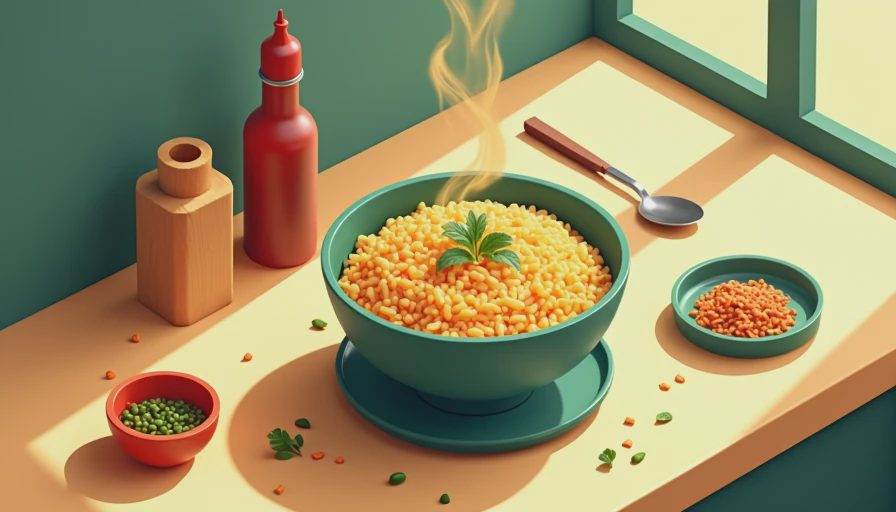
The right amount and the right timing
For four cups of cooked rice, begin with one teaspoon of fish sauce. If you are also using soy sauce, keep the soy sauce to one or two teaspoons at first. You can add more, but you cannot easily rescue rice that has become too salty. For a large family batch of six cups, start with two teaspoons of fish sauce and adjust near the end.
Add fish sauce in fried rice after the vegetables and protein have warmed through, but before the rice is completely finished. Drizzle it around the hot sides of the pan instead of pouring it onto one cold pile of rice. The heat helps cook off some of the raw fermented edge, and tossing quickly distributes the flavor. A wide skillet works well if you do not own a wok.
Cold, day-old rice is the easiest choice because the grains are firm and separate quickly. Fresh rice contains more moisture and can turn soft or clumpy. If fresh rice is all you have, spread it on a sheet pan and refrigerate it for 30 minutes, or cook it with slightly less water next time. Break up large clumps before the rice hits the pan.
A simple weeknight method
Heat a large skillet over medium-high heat. Add a tablespoon of neutral oil, such as canola, avocado, or peanut oil. Scramble two eggs until just set, then move them to a plate. Add another teaspoon of oil if the pan looks dry, followed by diced onion, carrots, and any firm vegetables you have. Cook until they soften but still have some bite.
Add garlic and scallions for the final 30 seconds of vegetable cooking. Garlic burns quickly, so it belongs late, not at the beginning of a cold pan. Stir in four cups of cold rice and use your spatula to press apart clumps. Keep the rice moving for three to five minutes, until the grains are hot and some edges look lightly toasted.
Return the eggs to the skillet. Add one teaspoon fish sauce, one teaspoon soy sauce, and a small pinch of sugar. That pinch does not make the dish sweet; it rounds out the salty, fermented flavors. Toss until the rice is evenly seasoned. Taste a spoonful from the center of the pan, where heat and sauce have had time to meet, then add more seasoning only if needed.
Fish sauce in fried rice should support the other ingredients rather than announce itself. If you can clearly identify a fishy flavor, add more plain rice, an extra scrambled egg, or a squeeze of lime to rebalance the batch. A handful of sliced scallions at the end also brings freshness.

Flavor combinations that make sense
For a family-friendly version, use eggs, peas, carrots, corn, and diced chicken. Keep the fish sauce modest and serve chili crisp or hot sauce at the table for adults. The rice will still have plenty of flavor without forcing every eater to enjoy the same spice level.
Shrimp and fish sauce are a natural pairing, but cook the shrimp separately if your pan is crowded. Small shrimp usually need only two to three minutes, depending on size. Remove them when pink and opaque, fry the rice, and fold them back in at the end. This prevents rubbery seafood and leaves room for the rice to toast.
For a meatless dinner, try mushrooms, edamame, scrambled eggs, and shredded cabbage. Mushrooms absorb seasoning beautifully, while edamame adds protein and a little sweetness. If you want a smoky note, finish with a few drops of toasted sesame oil. Use it at the end rather than as your main cooking oil because its aroma fades under high heat.
Substitutions when the bottle is missing
If you do not have fish sauce in fried rice, Worcestershire sauce can provide a similar fermented savory quality. Use about half a teaspoon for four cups of rice because it has a stronger tang. Oyster sauce is another practical substitute, especially with chicken or vegetables, but it is thicker and slightly sweeter. Start with one teaspoon and reduce any added sugar.
Soy sauce alone will still make good fried rice. Add a pinch of mushroom seasoning, a little miso dissolved in water, or extra browned mushrooms if you want more depth. Coconut aminos are less salty and sweeter than soy sauce, so you may need more of them, but add gradually. The goal is balanced seasoning, not loyalty to one bottle.
For anyone avoiding fish, check labels carefully and use a vegetarian mushroom stir-fry sauce or a small amount of white miso. These options will not taste identical, but they will provide the savory foundation that makes fried rice satisfying.
Troubleshooting a batch that is not quite right
If the rice tastes bland, it probably needs salt, acid, or both. Add a few drops of fish sauce, then taste again before adding more. If it tastes salty but dull, use lime juice or rice vinegar at the table. Acid wakes up the flavors without adding another layer of salt.
If the rice is greasy, spread it across the skillet so steam can escape and let it cook for another minute. If it is wet, the pan may be crowded or the rice may have been freshly cooked. Increase the heat briefly, keep stirring, and avoid adding more sauce until excess moisture is gone.
If fish sauce in fried rice tastes too strong, do not throw dinner away. Add more unsalted rice, vegetables, or egg, then balance the enlarged batch with lime juice and scallions. Next time, measure the first addition instead of pouring directly from the bottle. That one habit prevents most seasoning mistakes.
Make it work for leftovers
Fried rice is excellent for using small amounts of food that are already in the refrigerator. Keep cooked rice, eggs, frozen vegetables, and one protein option on hand, and dinner is close. Portion leftovers into shallow containers and refrigerate them promptly. Reheat only what you plan to eat so the texture stays better and the rice is not repeatedly warmed.
My usual formula is simple: hot pan, enough oil to prevent sticking, vegetables first, rice second, seasoning near the end, and fresh garnishes last. Once you understand that flow, you can make fish sauce in fried rice with chicken on Monday, shrimp on Wednesday, and vegetables on Friday without following a rigid recipe. Start with a small amount, taste deliberately, and let the ingredients tell you what they need.


Travellers Write
No letters yet — be the first traveller to write.