If you have spotted shrimp mei fun on a takeout menu and wondered what you were ordering, you are in good company. What is shrimp mei fun, exactly? It is a stir-fried noodle dish made with thin rice noodles, shrimp, vegetables, and a light, savory sauce. The noodles are delicate, springy, and pleasantly chewy rather than heavy like wheat-based lo mein noodles. It is the kind of dinner that looks like it needs restaurant equipment but comes together neatly in a home skillet when you prep before turning on the heat.
What shrimp mei fun means
The word “mei fun” refers to thin rice noodles. Depending on the restaurant, you might also see the dish listed as shrimp rice noodles, shrimp vermicelli, or Singapore-style noodles, although those names can describe slightly different preparations. The basic idea stays consistent: soaked rice noodles are tossed quickly with shrimp, aromatics, vegetables, and seasoning.
So, what is shrimp mei fun in terms of texture and flavor? Think light but savory, with garlic, ginger, scallions, soy sauce, and toasted sesame notes. The shrimp bring a gentle sweetness, while cabbage, carrots, onions, bell peppers, or bean sprouts add crunch. Some versions include scrambled egg. Others use curry powder or a little chile for a warmer, more aromatic flavor.
This is not a saucy noodle bowl. The sauce should coat the strands without pooling at the bottom of the pan. That difference matters. Too much liquid makes rice noodles soft and sticky, while just enough seasoning lets the noodles stay separate and lets the shrimp taste like shrimp.

How shrimp mei fun is made
The most important step is soaking the noodles correctly. Follow the package directions, but stop when the noodles are flexible and still slightly firm in the center. They will finish cooking in the skillet. If they are completely soft before they hit the pan, they can break apart or turn gummy during stir-frying.
While the noodles soak, mix a simple sauce. For four servings, try 3 tablespoons low-sodium soy sauce, 1 tablespoon oyster sauce, 1 teaspoon toasted sesame oil, 1 teaspoon rice vinegar, and a small pinch of sugar. Add white pepper, grated ginger, or chile flakes if you like. Oyster sauce is not mandatory, but it gives the dish the rounded savory flavor people often recognize from takeout.
Pat the shrimp dry before cooking. Moist shrimp steam instead of sear, and the extra water can dilute the sauce. Medium shrimp, around 26 to 30 per pound, work well for a weeknight batch. Cook them in a hot, lightly oiled skillet for about one to two minutes per side, just until pink and opaque, then move them to a plate. They will return at the end so they do not become rubbery.
Next, cook the vegetables in stages. Start with onion, carrot, and bell pepper because they need more time. Add garlic and ginger later, when the vegetables are nearly tender, so those aromatics do not burn. Cabbage and bean sprouts need only a quick toss. This order is the same restaurant-kitchen logic I use at home: cook each ingredient for the time it actually needs.
What does shrimp mei fun taste like?
A useful answer to what is shrimp mei fun is that it tastes bright, savory, and lightly toasted rather than thick or sweet. The rice noodles have a clean flavor, so the sauce and aromatics carry the dish. Shrimp add a mild ocean sweetness, while sesame oil contributes fragrance more than heaviness.
The final flavor depends on balance. Soy sauce supplies salt, oyster sauce brings depth, rice vinegar keeps the noodles from tasting flat, and sugar rounds off sharp edges. You do not need a dramatic amount of sauce. A small amount spread across many strands can taste more flavorful than a large puddle concentrated in a few bites.
If your family prefers gentle seasoning, leave out chile flakes and serve hot sauce at the table. If you want more restaurant-style aroma, add a pinch of white pepper and extra scallion greens just before serving. For a smoky edge, let the noodles sit undisturbed for 20 to 30 seconds in the hot pan before tossing. That brief contact creates browned spots without requiring a powerful wok burner.
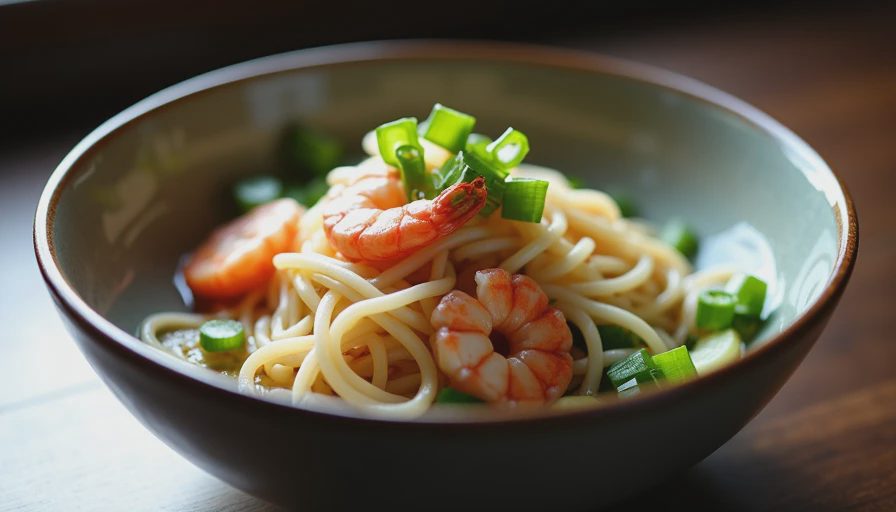
Choosing ingredients at a regular grocery store
You do not need a specialty market to make a good version. Look for dried rice vermicelli in the international aisle. Thin rice sticks work better than wide rice noodles because they absorb seasoning evenly and match the classic texture. If the package offers several soaking methods, choose the one that leaves the noodles firm enough to stir-fry.
Frozen shrimp are completely practical. Thaw them overnight in the refrigerator or place them in a sealed bag in cold water for about 20 to 30 minutes. Avoid warm water, which can start changing their texture. Pre-shredded coleslaw mix is a smart shortcut for cabbage and carrots, especially when dinner needs to happen quickly. A bag of frozen peas can replace bean sprouts, though peas will make the dish sweeter and softer.
For a lower-cost meal, use 8 ounces of shrimp with two eggs and extra vegetables instead of building the entire dish around seafood. For four people, 8 to 12 ounces of shrimp is usually enough when paired with 8 ounces of dry noodles and several cups of vegetables. That approach stretches the protein without making dinner feel skimpy.
Common mistakes and easy fixes
When someone asks what is shrimp mei fun, I often explain what it is not: it is not a dish you can successfully make by throwing everything into a cold pan. Cold ingredients release water, and crowded noodles clump. Heat the pan first, use enough oil to prevent sticking, and cook in batches if your skillet is small.
The second common mistake is over-soaking. Noodles that feel perfectly edible straight from the soaking bowl are often too soft for the pan. Aim for flexible but firm. If your finished noodles are sticky, reduce the soaking time next time and make sure excess water is drained thoroughly.
Another problem is adding the sauce too early. Pouring it over raw vegetables creates a wet pan and can make the noodles break. Cook the vegetables, add the noodles, pour the sauce around the edge of the pan, and toss quickly. Return the shrimp last, then taste before adding more soy sauce because the noodles continue absorbing seasoning as they sit.
A simple weeknight cooking plan
Start by mixing the sauce and soaking the noodles. While they soften, slice the vegetables, thaw or pat dry the shrimp, and set everything beside the stove. Once the pan is hot, the cooking should take about 10 minutes. Cook the shrimp and remove them, stir-fry the vegetables, add noodles and sauce, then fold the shrimp back in.
Serve shrimp mei fun immediately with scallions, sesame seeds, or a squeeze of lime. Leftovers keep in the refrigerator for about three days in a covered container. Reheat them in a skillet with a splash of water rather than blasting them in the microwave; the skillet helps loosen the noodles and brings back a little of their original texture.
Now when you see the dish on a menu, the answer to what is shrimp mei fun is simple: thin rice noodles stir-fried with shrimp, vegetables, and balanced savory seasoning. It is quick, flexible, and friendly to ordinary grocery-store cooking. Good food should fit real life, and this is one of those dinners that proves it.

Travellers Write
No letters yet — be the first traveller to write.