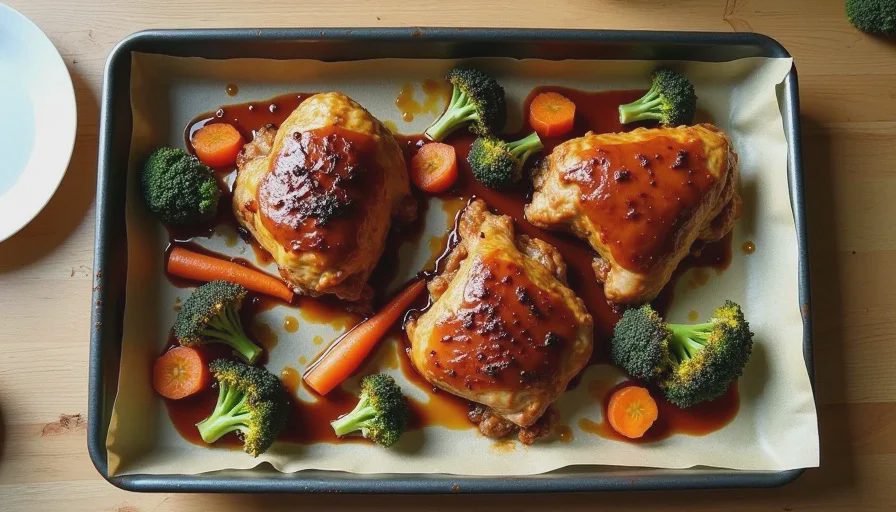
Some nights I just don’t want to stand over a pan. My back hurts, the kids are cranky, and the idea of stirring something for twenty minutes feels like a punishment. Those are the nights I make my soy-honey chicken tray bake. It’s one sheet pan, a handful of ingredients, and the oven does most of the work. That’s the kind of dinner a tired parent needs.
I learned to love tray bakes when I worked in a fusion restaurant kitchen. We didn’t call them “tray bakes” back then, but the logic was the same: put protein and vegetables on a sheet pan, hit it with heat, and let the Maillard reaction do the work. At home, that logic still holds up. If you get the sauce right and cut everything to the right size, a sheet pan dinner can taste like you put in way more effort than you actually did.
Why Chicken Thighs Are the Right Choice
I use boneless, skinless chicken thighs for this. They’re forgiving in a way chicken breasts aren’t. If you leave them in the oven a few extra minutes because a kid needed help with homework, they don’t dry out. Thighs have enough fat to stay juicy, and that fat renders into the pan and flavors the vegetables.
What About Chicken Breasts?
You can use chicken breasts if that’s what you have. But watch the time carefully. Breasts go from done to dry in a matter of minutes. If I’m using breasts, I cut them into smaller pieces or pound them to an even thickness so they cook faster and more evenly. But when I’m tired, I reach for thighs. Less risk, more flavor.
The Soy-Honey Sauce That Makes It Work
This sauce is the same idea I use for stir-fries, but it behaves a little differently in the oven. Here’s what goes into it:
3 tablespoons soy sauce
2 tablespoons honey
1 tablespoon rice vinegar or lime juice
1 clove garlic, minced
1 teaspoon sesame oil, for finishing
I whisk this together in a small bowl while the oven preheats. The honey helps the sauce caramelize on the chicken and vegetables as the tray bake cooks. The soy gives it depth and salt. The vinegar keeps it from tasting too sweet.
One note: don’t skip the acid. Without it, the sauce can feel flat and sticky. A little vinegar or lime juice brightens the whole thing.
How to Build the Tray Bake
The order matters here. You want everything to finish cooking at the same time, which means cutting your vegetables to match the pace of the chicken.
1. Preheat and Line Your Pan
Set your oven to 425°F. Line a sheet pan with parchment paper or foil. Parchment is easier for cleanup, but foil works if that’s what you have. I use a rimmed sheet pan so the sauce and juices don’t spill.
2. Choose Vegetables That Can Handle the Oven
My go-to mix is broccoli, carrots, and red onion. Broccoli gets crisp at the edges, carrots soften and sweeten, and red onion brings a little bite. Cut them into pieces that are roughly the same size so they cook evenly. If you’re using something denser like potatoes, cut them smaller or give them a head start.
3. Toss Everything with the Sauce
Put the chicken thighs and vegetables on the sheet pan. Pour about two-thirds of the sauce over everything and toss with your hands or a spatula. You want every piece to have a little sauce on it, but you don’t want everything swimming. Reserve the rest of the sauce for basting halfway through.
4. Roast and Baste Once
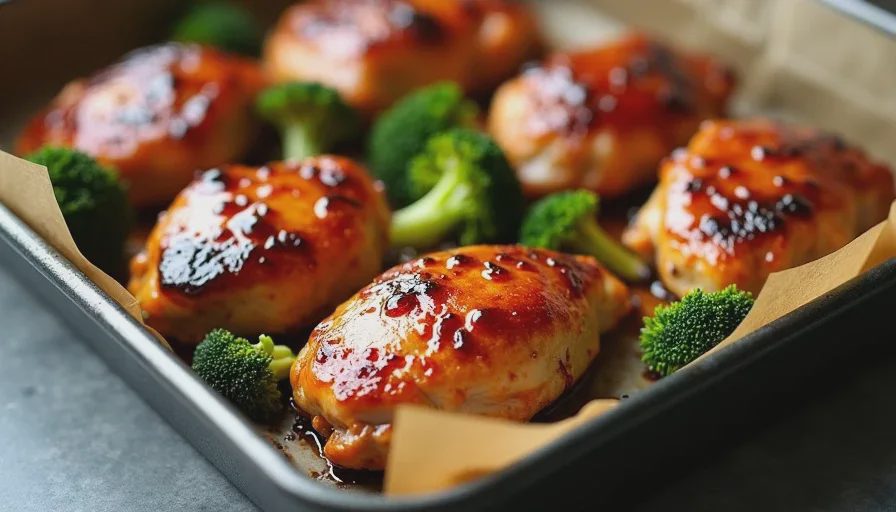
Roast for about 20 minutes. Pull the pan out, spoon the remaining sauce over the chicken, and give the vegetables a quick toss. Then put it back in for another 10 to 15 minutes. The chicken should reach 165°F inside, and the vegetables should have some browned edges.
If you want more color, turn on the broiler for the last two minutes. But watch it closely. Broilers go from golden to burnt fast.
What to Serve with It
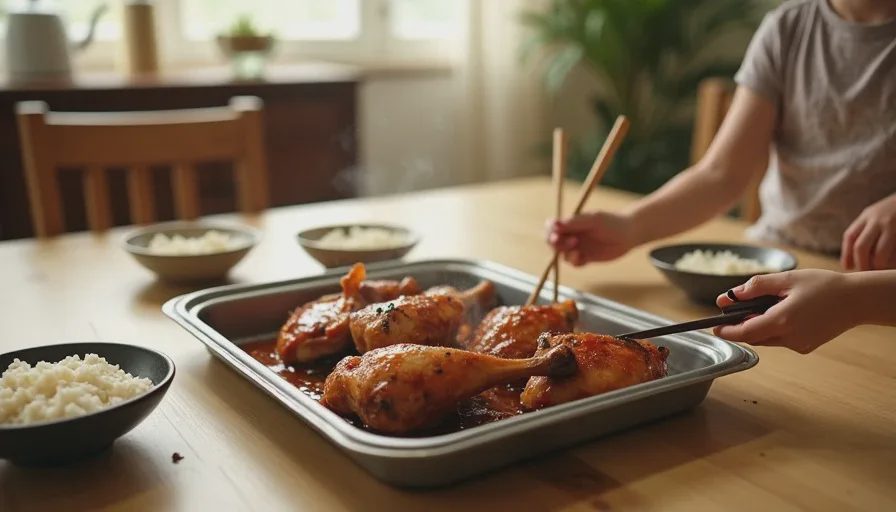
Rice is the obvious choice, and it’s a good one. I start a pot of rice before I even preheat the oven. White rice takes about eighteen minutes, which lines up almost perfectly with the tray bake. If I’m too tired for rice, I’ll warm some frozen rice or just serve the tray bake as is. It’s a full meal on its own.
Sometimes I’ll add a quick cucumber salad if I have a cucumber in the fridge. Thinly slice it, toss with a little rice vinegar and a pinch of sugar, and it’s done. That little bit of fresh crunch goes a long way.
Why This Works on Tired Weeknights
The reason this tray bake saves me is not because it’s fancy. It’s because it gives me a built-in break. Once the pan goes in the oven, I have twenty minutes to set the table, help with homework, or just sit down. I’m not chained to the stove. For a tired parent, that time is worth more than any restaurant technique.
Cleanup Is Fast
One sheet pan, one bowl for the sauce, and maybe a cutting board. That’s it. If you use parchment paper, cleanup takes about two minutes. On a Tuesday night, that feels like a win.
The Kids Actually Eat It
This is a family dinner that doesn’t require me to make two different meals. The soy-honey sauce is mild and a little sweet, which most kids like. My daughter Sofia eats it straight from the pan. My son Lucas picks out the broccoli first, but he eats the chicken and carrots. I call that a good night.
Make It Your Own
The best thing about a tray bake is how flexible it is. Swap the chicken for tofu or salmon. Use green beans, zucchini, or bell peppers instead of broccoli and carrots. Add a pinch of red pepper flakes if you want heat. The method stays the same.
That’s the kind of cooking I want you to feel comfortable with. Not a rigid recipe, but a rhythm you can follow with whatever you have. On tired weeknights, that’s the difference between ordering takeout and eating something you actually made.
Good food should fit real life. This tray bake does.



Travellers Write
No letters yet — be the first traveller to write.