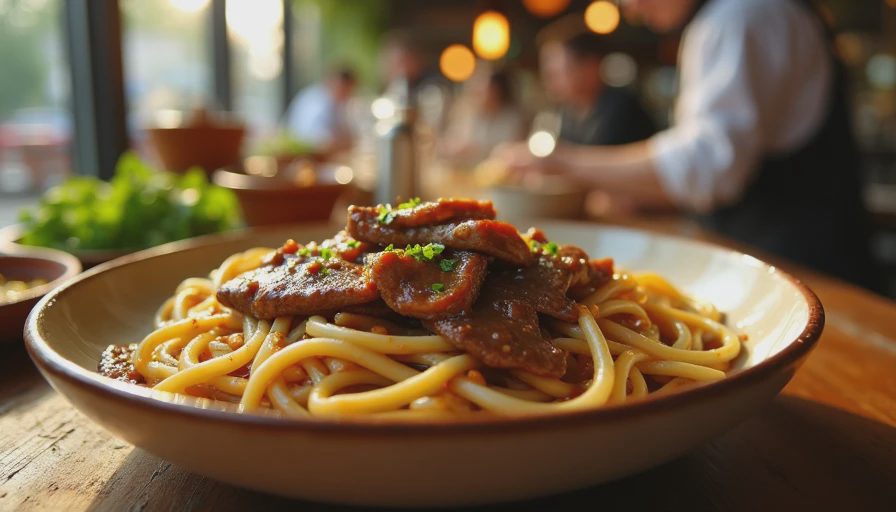
Beef chow fun with gravy is the kind of dinner that feels like a takeout treat but works beautifully in a regular home kitchen. You get wide, silky rice noodles, tender slices of beef, crisp vegetables, and a glossy savory sauce that brings everything together. The key is not fancy equipment. It is having your ingredients ready before the pan gets hot and cooking in the right order.
This recipe serves four and takes about 35 minutes, including prep. I use flank steak because it is affordable, flavorful, and easy to find at most American grocery stores. Sirloin works too. For the noodles, look for fresh wide rice noodles in the refrigerated section of an Asian market, or use dried wide rice noodles when that is what you have. Good food should fit real life, so there is no prize for making grocery shopping harder than dinner needs to be.
What makes beef chow fun with gravy work
The dish has three important parts: properly sliced beef, noodles that stay intact, and a sauce with enough body to cling to every bite. Slice the steak thinly across the grain. If the meat is slippery, place it in the freezer for 15 to 20 minutes first. That short chill firms it up without freezing it solid and makes thin slices much easier.
For the beef, combine 1 pound of flank steak with 1 tablespoon soy sauce, 1 teaspoon cornstarch, 1 teaspoon neutral oil, and a small pinch of baking soda. The cornstarch helps the surface stay silky, while the baking soda gently softens the meat. Do not use more than a pinch; too much can make the texture spongy.
The gravy starts with 1 cup low-sodium beef broth, 2 tablespoons soy sauce, 1 tablespoon oyster sauce, 1 teaspoon toasted sesame oil, and 1 teaspoon cornstarch mixed with 2 tablespoons cold water. Add a teaspoon of sugar if you like a rounder, takeout-style flavor. Taste the sauce before cooking. It should be savory, slightly sweet, and concentrated enough to season noodles without becoming harsh.
Prep the noodles and vegetables before heating the pan
Fresh rice noodles need gentle handling. Separate them with your fingers before cooking, and if they feel stiff, loosen them briefly according to the package directions. Do not boil fresh noodles aggressively. They can turn soft and break before they reach the skillet. Dried noodles should be cooked just shy of tender, then drained well. A little firmness is useful because they finish cooking in the sauce.
Choose vegetables that cook quickly. I like 1 small onion cut into thin wedges, 2 cups of bean sprouts, 1 sliced bell pepper, and 3 green onions cut into two-inch pieces. Broccoli, snow peas, shredded cabbage, or baby spinach can stand in for any of these. Avoid filling the pan with too many vegetables at once. A crowded skillet steams everything, and you lose the browned edges that make the meal taste substantial.
Set the marinated beef, noodles, vegetables, sauce, spatula, and serving bowl next to the stove. This is the restaurant habit that saves home cooks from scrambling. Once the pan is hot, the whole dish moves quickly. Measure first, cook second.
Cook beef chow fun with gravy in the right order
Heat a large carbon-steel skillet, wok, or nonstick frying pan over medium-high heat. Add 1 tablespoon of neutral oil. When the oil shimmers, spread the beef in one layer. Cook for about 60 to 90 seconds on the first side, then turn the pieces and cook until they have browned edges but are not fully cooked through. Transfer the beef to a plate.
Add another teaspoon of oil if the pan looks dry. Cook the onion and bell pepper for two minutes, then add the green onions and bean sprouts. Stir often, but let the vegetables sit for a few seconds between turns. That small pause gives them color instead of leaving them pale and watery.
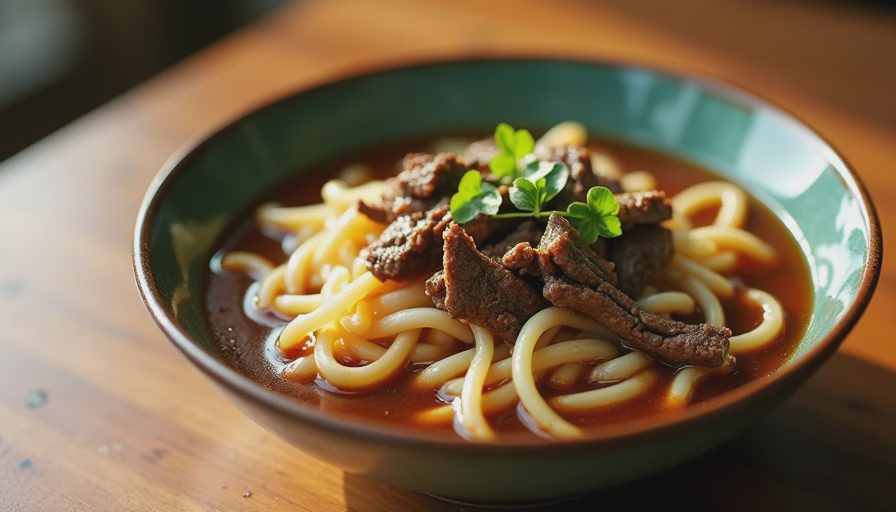
Add the noodles and toss gently. Do not jab at them with the spatula. Lift and turn them so they stay wide and intact. Pour in the sauce, then return the beef and any juices from the plate. Toss for two to three minutes, until the sauce thickens and coats the noodles. This is the moment that turns beef chow fun with gravy from separate ingredients into dinner.
If the sauce tightens too quickly, add a splash of broth or water. If it seems thin, let the pan bubble for another 30 seconds. Cornstarch thickens as it heats, so give it time before adding more. Finish with extra green onion and a few drops of sesame oil.
Smart substitutions for a regular grocery trip
You do not need every traditional ingredient to make beef chow fun with gravy satisfying. Low-sodium soy sauce is a practical choice because it gives you room to adjust the salt. If you do not have oyster sauce, use 1 tablespoon hoisin sauce plus 1 teaspoon soy sauce. The flavor will be a little sweeter, but it will still give the gravy depth.
Fresh wide rice noodles are ideal, but dried pad thai noodles can work in a pinch. They are usually narrower, so watch them closely and avoid overcooking. Flat udon noodles create a chewier version, while linguine is acceptable for a pantry emergency. It will not be the same dish, but the beef, vegetables, and sauce will still make a very good dinner.
For a gluten-free meal, use gluten-free tamari and confirm that your oyster or hoisin sauce is labeled gluten-free. For a lower-sodium version, reduce the soy sauce and use unsalted broth, then add more at the table only if needed. Keep the baking soda out if you prefer a simpler marinade; the beef will still be tasty when sliced thinly and cooked quickly.
How to serve and store the leftovers
Serve beef chow fun with gravy immediately, while the noodles are glossy and the vegetables still have some bite. A simple cucumber salad or sliced oranges makes a fresh side, but you do not need another complicated dish. The noodles are filling on their own, especially when you include plenty of beef and vegetables in each bowl.
For children, hold back a little sauce before adding extra soy sauce or sesame oil. The finished dish is savory rather than spicy, so it is usually easy to keep family-friendly. Adults can add chili crisp, hot sauce, or thinly sliced jalapeno at the table instead of making the entire pan hot.
Store leftovers in a covered container for up to three days. Reheat them in a skillet with a tablespoon of water or broth. The added moisture loosens the sauce and helps the noodles regain their soft texture. A microwave works for one serving, but cover the bowl and stir halfway through so the edges do not dry out.
A calm weeknight cooking plan
If you want beef chow fun with gravy on the table by 7:00, slice and marinate the beef at 6:20. Mix the sauce and cut the vegetables at 6:25. Prepare the noodles by 6:35, then heat the pan at 6:40. The actual cooking should take less than ten minutes. This plan keeps the busy part short and prevents the common mistake of trying to chop vegetables while the beef is already burning.
The best result comes from trusting the sequence: brown the beef, cook the vegetables, warm the noodles, then thicken everything together. High heat helps, but control matters more than maximum heat. If your skillet is small, cook the beef in two batches and finish the dish in the same pan.
That is the whole approach behind beef chow fun with gravy: simple ingredients, deliberate prep, and fast cooking at the end. Make it once, notice how the sauce behaves, and adjust the sweetness or salt to suit your table. The next time, dinner will feel less like following a recipe and more like knowing what the pan needs.

Travellers Write
No letters yet — be the first traveller to write.