Jook soup is the kind of dinner that quietly saves you. It uses rice, broth, and whatever sounds good from the refrigerator, then turns those simple ingredients into a warm, spoonable meal. The texture is soft and comforting, but the flavor does not have to be flat. With a little ginger, garlic, scallions, and a savory topping, this rice porridge becomes a dinner that works for sick days, cold evenings, and busy nights when nobody wants a complicated recipe.
What makes jook soup so comforting
Jook soup is essentially rice cooked with extra liquid until the grains break down and thicken the broth. You will also see it called congee in many recipes. The names and regional styles vary, but the home-cooking idea is wonderfully practical: stretch a small amount of rice into several generous bowls.
Start with white long-grain rice, jasmine rice, or medium-grain rice. Jasmine rice gives the porridge a soft, fragrant finish, while medium-grain rice becomes especially creamy. Brown rice works too, but it needs more liquid and a longer simmer, and the finished texture stays pleasantly chewy rather than silky.
For four servings, combine 1 cup uncooked rice with 7 to 8 cups chicken broth, vegetable broth, or water. Broth gives you a head start on flavor, but water is perfectly fine if you build the seasoning later. Add a small piece of fresh ginger and one smashed garlic clove while the rice cooks. Remove both before serving if you prefer a clean, simple bowl.
The main thing that matters is patience at the beginning. Bring the pot to a boil, then lower the heat so the liquid barely bubbles. A hard boil can make the bottom scorch before the rice softens. Stir every 10 to 15 minutes, scraping across the base of the pot.
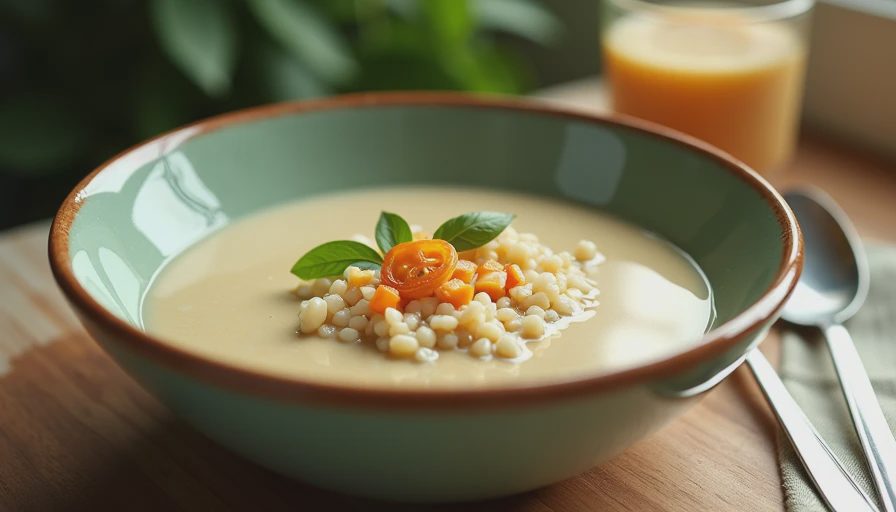
How to make jook soup on the stovetop
Rinse the rice once or twice, then place it in a heavy-bottomed saucepan or Dutch oven with the broth. Rinsing removes some surface starch, but you do not need perfectly clear water. This is a relaxed recipe, not a laboratory exercise.
Bring everything to a boil over medium-high heat. Once bubbling, reduce the heat to low and partially cover the pot. Cook for 45 to 60 minutes, stirring occasionally. The rice will swell, split, and gradually release starch into the liquid. If the mixture becomes thick before the grains are tender, add hot water or broth in half-cup additions.
Jook soup should look loose when you turn off the heat. It thickens as it rests, and a porridge that seems perfect in the pot can become stiff in the bowl. Stir in salt near the end, because broth brands vary in sodium. A teaspoon of toasted sesame oil, a splash of soy sauce, or a little white pepper can finish the base without taking over.
For a faster version, use leftover cooked rice. Simmer 4 cups cooked rice with 5 cups broth for about 25 minutes, stirring often. The grains will not dissolve quite as smoothly, but the result is still cozy and useful. This shortcut is especially good when dinner needs to happen before homework, baths, and bedtime.
Protein and vegetable ideas that fit real life
Jook soup is a flexible base, so you can make it hearty without buying specialty ingredients. Add thin slices of boneless chicken during the last 15 to 20 minutes of cooking. Ground pork or turkey can be browned separately with ginger and garlic, then spooned over each serving. Shredded rotisserie chicken is the easiest option: stir it in during the final five minutes so it warms without drying out.
Eggs are another excellent choice. Whisk two eggs and pour them slowly into the simmering porridge while stirring in one direction. The egg forms soft ribbons, similar to egg drop soup. For a vegetarian bowl, add sliced mushrooms, frozen corn, chopped spinach, peas, or diced carrots. Frozen vegetables can go straight into the pot during the final 8 to 10 minutes.
If you have leftover roast pork, steak, chicken, or even a few pieces of cooked salmon, slice it thin and use it as a topping. Small portions go a long way because the creamy rice carries the meal. This is restaurant kitchen logic adapted for home: use the starch as the generous part and let concentrated toppings provide contrast.
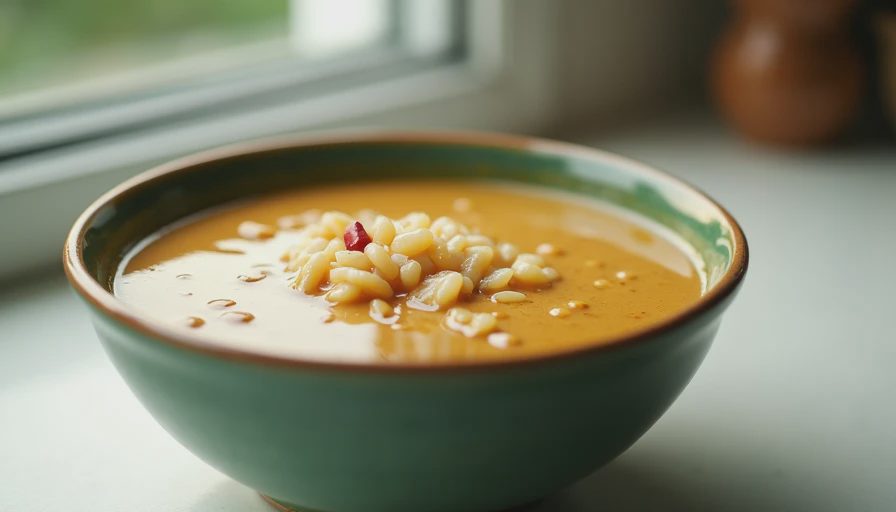
Toppings that wake up the whole bowl
A bowl of jook soup needs texture and brightness. Start with sliced scallions, toasted sesame seeds, and a few drops of sesame oil. From there, add what your pantry can support. Crispy fried onions, crushed roasted peanuts, or store-bought chili crisp bring crunch. Soy sauce adds salt and depth, while rice vinegar cuts through the soft, rich texture.
For a mild family dinner, put toppings on the table instead of mixing them into the pot. Children can choose scallions, shredded chicken, or a little sesame oil, while adults can add chili crisp, black pepper, or sliced jalapeno. This keeps one dinner workable for different comfort levels.
I also like a quick savory sauce made from 2 tablespoons soy sauce, 1 teaspoon rice vinegar, 1 teaspoon sesame oil, and a pinch of sugar. Drizzle it lightly over each bowl rather than seasoning the entire pot. The contrast between plain porridge and a salty, sharp topping makes every bite more interesting.
Storage, reheating, and meal prep
Jook soup thickens dramatically in the refrigerator, so store it in shallow containers and cool it promptly. Refrigerate leftovers for up to four days. When reheating, place one portion in a saucepan with a splash of water or broth. Warm it over medium-low heat, stirring until the rice loosens. The microwave works too; cover the bowl loosely and stir halfway through heating.
The texture often becomes even creamier the next day. Keep crunchy toppings separate so they do not turn soft. Cooked chicken, mushrooms, and vegetables can be stored with the porridge, but fresh scallions, herbs, vinegar, and chili crisp should be added after reheating.
You can also freeze jook soup in single-serving containers for up to two months. Leave room for expansion and thaw it overnight in the refrigerator. Reheat gently with extra liquid. The rice may separate slightly after freezing, but a thorough stir brings it back together.
A simple jook soup formula to remember
Think of jook soup as a method, not a rigid recipe. Use 1 part uncooked rice to 7 or 8 parts liquid, then add aromatics, protein, vegetables, and toppings according to the night you are having. Choose broth when you want a fuller base, water when your toppings are strongly seasoned, and leftover rice when time is tight.
Taste at the end, not just at the beginning. Salt, soy sauce, and sesame oil behave differently as the liquid reduces. Add seasoning in small amounts, then give the pot a minute before tasting again. If the bowl tastes heavy, use vinegar or scallions. If it tastes bland, add salt or a savory topping rather than dumping in a large amount of soy sauce.
Good food should fit real life. Jook soup does that beautifully: one pot, ordinary groceries, flexible toppings, and enough comfort to make a difficult day feel a little more manageable.

Travellers Write
No letters yet — be the first traveller to write.