If you ask me what separates a calm weeknight cook from a stressed one, I’ll tell you it’s not skill. It’s prep. The years I spent working in Chinese restaurant kitchens taught me one thing over and over: the cooking itself is the easy part. The hard part is what happens before the heat goes on. Most home cooks skip that part, and then wonder why dinner feels like a scramble. These restaurant prep tips aren’t about being fancy. They’re about making your kitchen feel less like a battle.
When you work a wok station, you don’t start cooking when the ticket comes in. Your station is already set. Your garlic is minced, your scallions are cut, your sauces are mixed, your protein is portioned. That’s called mise en place, and it’s the difference between moving with rhythm and running behind. At home, the same habits work. You just need to scale them down so they fit real life.
Why Home Cooks Skip Prep
Most home cooks think prep is extra work. They want to get dinner on the table fast, so they start the pan first and chop while the oil heats up. I get it. But that’s how you end up with burned garlic, overcooked chicken, and a pile of dishes you didn’t plan for.
The Pan Moves Faster Than You Do
Restaurant burners are fast, but so is a home stove when it’s already hot. If you’re still cutting ginger when the oil is shimmering, you’re already behind. The food will tell you. Garlic burns in seconds. Chicken sticks. Sauce clumps. None of that is about talent. It’s about timing, and timing starts with prep.
Decision Fatigue in the Kitchen
Another reason people skip prep is that they don’t know what to do first. So they open the fridge, stare for a while, pull things out one at a time. That’s decision fatigue, and it drains you before you even cook. Restaurant kitchens eliminate that by setting up the station the same way every shift. You can do a version of that at home.
The Prep Habits That Actually Matter
You don’t need to turn your kitchen into a restaurant line. But there are a few habits worth stealing.
1. Read the Recipe Before You Cook
This sounds obvious, but most people don’t do it. They read as they go, which means they discover at step four that the sauce needed to sit for ten minutes. That’s how dinner falls apart. Before you turn on the stove, read the whole thing once. Know what comes next. If there’s no recipe, mentally walk through the order: protein, aromatics, vegetables, sauce, combine.
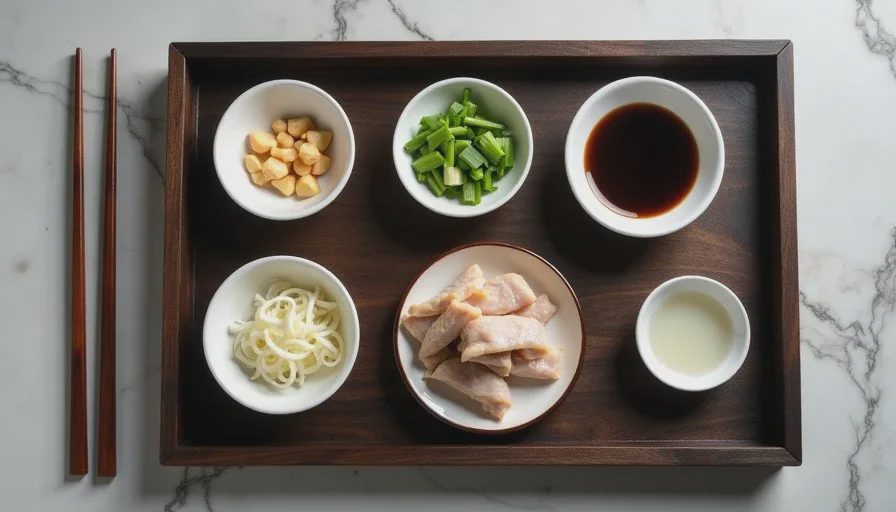
2. Set Up Your Mise en Place—But Small
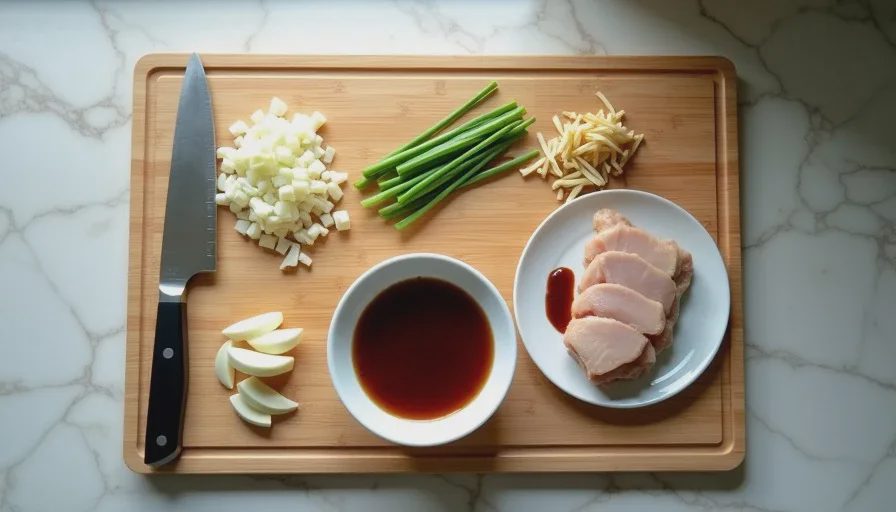
You don’t need a dozen little bowls like a cooking show. I use one plate for the protein, one bowl for the sauce, and one pile of aromatics on the cutting board. That’s enough. The goal is not to dirty extra dishes; it’s to have everything within reach before the pan gets hot.
Here’s what my station looks like on a typical stir-fry night:
Protein: cut and seasoned on a plate
Aromatics: garlic, ginger, scallions chopped together on the cutting board
Vegetables: washed and cut, ready in a colander
Sauce: mixed in a small bowl with a spoon
That’s it. Four things. Once the pan heats up, I’m not stopping to chop or measure.
3. Mix Your Sauce First
This is the prep step that makes the biggest difference. Restaurant cooks never wait until the pan is hot to mix a sauce. The cornstarch needs time to dissolve, the flavors need a minute to come together, and the last thing you want is to measure soy sauce while your chicken overcooks. Mix the sauce in a bowl before you even turn on the stove. Put it next to the pan. When it’s time, you pour and go.
4. Prep in the Order of Cooking
A small thing, but it helps: prep in the order you’ll use things. Protein first, then aromatics, then vegetables, then sauce. That way, your brain follows the same path as your hands. This is how line cooks avoid the “where did I put the ginger?” panic. Everything has a place because you placed it in order.
What I Actually Do on a Weeknight
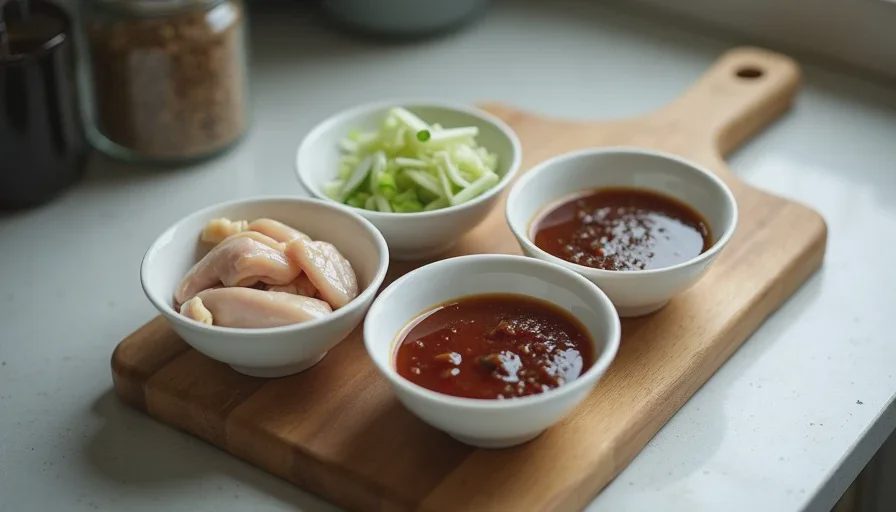
Let me give you a real example. Last Monday, I made a quick soy-garlic chicken with cabbage. Before I touched a pan, I did this:
I pulled out the chicken and cut it into strips. I put it in a small bowl with a little soy sauce and cornstarch. I chopped three cloves of garlic, a knob of ginger, and two scallions onto my cutting board. I sliced a quarter head of cabbage into thin ribbons and left it in a colander. I mixed the sauce: soy sauce, a little rice vinegar, a pinch of sugar, and a cornstarch slurry. Then I started the rice.
That whole prep took about twelve minutes. The cooking took about eight. The table was set while the pan was still hot. That’s what prep buys you: not more work, but less panic.
Prep Doesn’t Mean Doing Everything Ahead
I don’t want you to think you need to spend your Sunday dicing vegetables for the whole week. That works for some people, but it’s not required. You can prep ten minutes before dinner and get the same benefit. The key is to do it before the heat goes on, not while it’s on.
Weekend Prep vs. Weeknight Prep
On weekends, I might cook a big batch of rice or wash and chop a few hardy vegetables. But on weeknights, I prep just what I need for that meal. This is more realistic for most families. You don’t need a freezer full of bagged components. You need a clean start and a calm rhythm.
The Thing Most Home Cooks Miss
The biggest lesson from Chinese restaurant kitchens is not about knives or speed. It’s about respect for the process. Prep is not a chore before cooking. Prep is part of cooking. When you treat it that way, dinner stops being a stressful event and starts being a flow.
The next time you’re about to turn on the stove, stop for a second. Look around. Is your garlic ready? Is your sauce mixed? Is your protein within reach? If not, take two minutes to get there. That two minutes will save you ten later.
Calm Cooking Starts Before the Heat
I’ve worked in kitchens where the pace was brutal and the margins were thin. The cooks who thrived weren’t always the fastest with a knife. They were the ones who set themselves up to succeed before the rush started. That’s a lesson that applies everywhere, especially in a home kitchen with kids asking questions and a phone ringing in the other room.
Set your station. Mix your sauce. Read the recipe. Give yourself a clean path. That’s how you cook with confidence instead of chaos.
Good food should fit real life. It starts before the pan gets hot.
Travellers Write
No letters yet — be the first traveller to write.