In a Chinese restaurant kitchen, the first thing you learn is that the wok is already hot before the aromatics go in. Garlic, ginger, and scallions hit the oil, and the whole station smells like dinner. But that moment is shorter than people think. At home, most cooks rush the garlic, ginger, and scallions step or get the order wrong. The garlic burns, the ginger turns bitter, and the scallions disappear into the sauce. That’s why so many home stir-fries taste flat even when the sauce is right. The flavor base is the foundation, and if it’s rushed, the rest of the dish never quite gets there.
I’m Maggie Alvarez, and I spent years working wok stations in Chinese and fusion restaurant kitchens. I’ve burned more garlic than I care to admit. But once I learned how these three ingredients behave in hot oil, my stir-fries changed. The good news is that you don’t need a restaurant wok or a chef’s timing to get it right. You just need to understand what each ingredient is doing and when to add it.
Why This Flavor Base Matters
Garlic, ginger, and scallions are not just seasonings. They are the first layer of flavor in a dish. When they hit hot oil, they release aromatic compounds that infuse the entire cooking fat. That oil then carries the flavor into the meat, the vegetables, and the sauce. If you skip this step or rush it, the dish tastes one-dimensional, like soy sauce with extra steps.
The Oil Is the Messenger
When I cook, I think of the oil as the delivery system. The garlic, ginger, and scallions flavor the oil first. Then that oil flavors everything else. This is a technique that shows up across many Chinese cooking traditions, not just stir-fries. It’s the same reason you infuse oil for chili crisp or scallion noodles. The aromatics do their work early, and the rest of the dish benefits.
It’s Not About Dumping Everything In
The biggest mistake home cooks make is treating garlic, ginger, and scallions as one pile to dump into the pan at the same time. But each one cooks at a different rate. Garlic burns fast. Ginger can take a little more heat. Scallions are delicate, and the white parts behave differently from the green parts. If you add them all at once and stir for a minute, you end up with burnt garlic and raw ginger.
The Three Big Mistakes
Let me walk through the mistakes I see most often, because they’re easy to fix once you know about them.
Mistake 1: Adding Garlic Too Early
Garlic is the fastest to burn. In a hot pan, minced garlic can go from fragrant to bitter in about ten seconds. If you add it at the same time as the ginger and then take time to find your spatula, you’ve already lost it. Burnt garlic doesn’t just lose its flavor; it makes the whole dish taste acrid.
The fix is simple: add the garlic last, just before the vegetables or meat go in. Give it a few seconds in the oil until you smell it, then move on. If you’re cooking with sliced garlic, it can go a little earlier, but minced garlic needs to be watched.
Mistake 2: Not Treating Scallion Whites and Greens Differently
Scallions are two ingredients in one. The white and light green parts are more like an aromatic—they can handle heat and contribute a sharp, oniony flavor. The dark green parts are more like a garnish—they lose their color and brightness if cooked too long.
I always separate them. The whites go into the oil with the ginger. The greens go in at the end, after the heat is off or just before serving. This way you get both the depth from the whites and the fresh pop from the greens.
Mistake 3: Rushing the Ginger
Ginger needs a little more time than garlic but less than onion. If you add ginger to a cold pan, it just sits there. If you add it to a screaming hot pan, it burns. Medium-high heat is right. You want the ginger to sizzle gently and release its aroma without turning brown.
I usually cut ginger into thin matchsticks or mince it finely, depending on the dish. Matchsticks are easier to fish out if you’re making a broth. Minced ginger blends into the sauce. Either way, add it to the hot oil, stir for about twenty seconds, then add the scallion whites and garlic.
The Order I Use on a Weeknight
Here’s the order I follow when I’m building a stir-fry at home. This works for chicken, beef, tofu, or vegetables.
1. Heat the Pan and Oil First
Get your skillet or wok hot over medium-high heat before you add the oil. Once the oil shimmers, you’re ready. If you add aromatics to cold oil, they’ll soak up grease instead of infusing it.
2. Add Ginger First
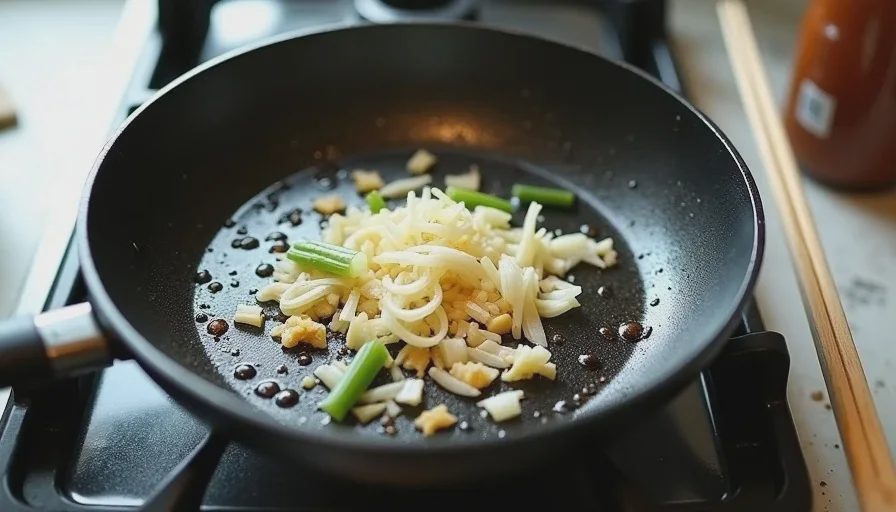
Ginger goes into the hot oil first because it can take a little longer to release its flavor. Stir it for about twenty seconds. You should see tiny bubbles around the edges and smell that clean, spicy warmth.
3. Add Scallion Whites
Next, add the white and light green parts of the scallions. Stir for another ten to fifteen seconds. They’ll soften and turn slightly translucent.
4. Add Garlic Last
Finally, add the minced garlic. Stir constantly for ten seconds or so. The moment you smell garlic, you’re done. Now you add your meat or vegetables, which will lower the pan temperature and stop the garlic from burning.
This whole process takes less than a minute. That’s why it matters. It’s a short window, and rushing it or getting distracted can ruin the base.
How Soy Sauce Fits Into the Flavor Base
Soy sauce often gets added too early. I see home cooks pour it in with the garlic and ginger, and the liquid cools the pan and steams everything. Instead, add soy sauce after the meat or vegetables have seared. The soy deglazes the pan and picks up the browned bits from the bottom.
The Sizzle You Want
When you add soy sauce to a hot pan, it should sizzle and reduce slightly. That’s the flavor concentrating. If you add it to a cold pan, it just pools there. The food absorbs it without that quick caramelization. Timing matters.
A Few Drops at the End
If you want a brighter soy flavor, reserve a few drops for the very end, after the heat is off. This gives you a fresh, salty top note that makes the dish taste more complete. It’s a small move, but it works.
How to Prep These Three Without Losing Your Mind
Prep is everything. If you’re still chopping garlic while the pan is hot, you’re already behind. Here’s how I set myself up.
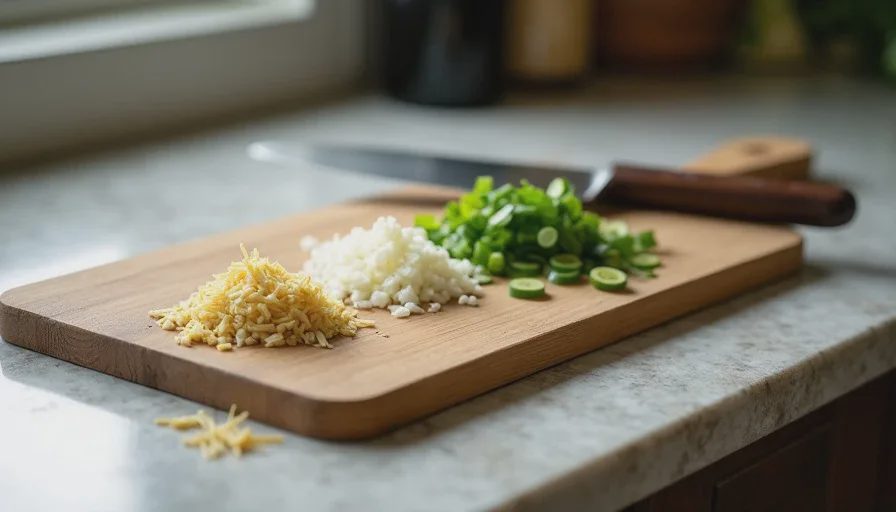
One Cutting Board, Three Piles
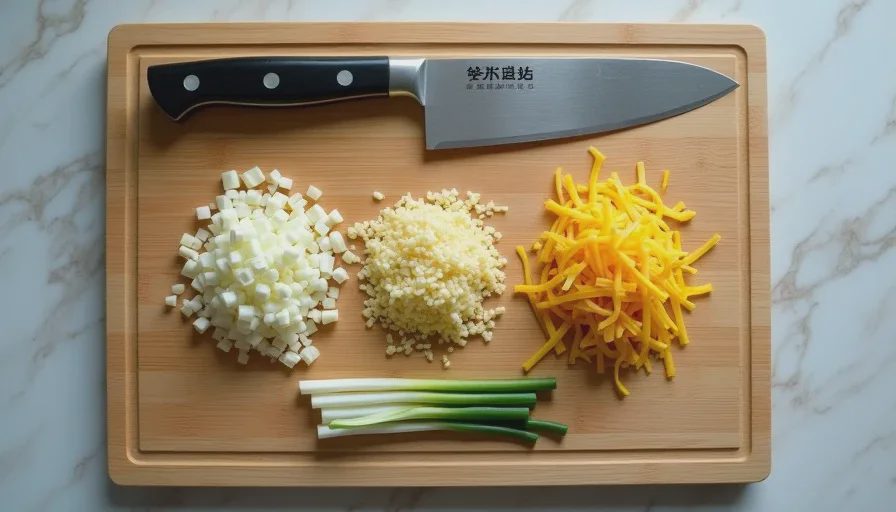
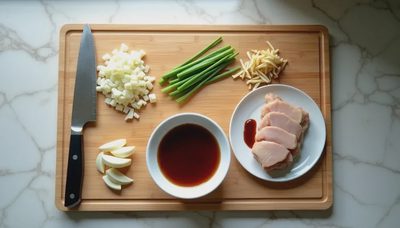
I chop everything before the pan goes on. Garlic gets minced. Ginger gets cut into matchsticks or minced. Scallions get separated into whites and greens. I keep them in three small piles on the cutting board, in the order I’ll use them: ginger, then scallion whites, then garlic. The scallion greens stay to the side for the end.
Use Frozen Ginger as a Shortcut
If you don’t want to deal with fresh ginger, frozen ginger grated on a microplane works great for this flavor base. It melts into the oil and gives you that same warmth. I keep a knob of ginger in the freezer for exactly this reason.
A Quick Test for Your Pan Heat
If you’re not sure whether your pan is hot enough, do the water test. Flick a few drops of water into the pan. If they sizzle and evaporate immediately, you’re ready. If they sit there and bubble slowly, wait a little longer. If they dance around like beads, the pan is too hot and you should lower the heat slightly.
This test takes two seconds and prevents most flavor-base failures. I still do it at home when I’m using an unfamiliar burner.
The Base That Makes Everything Else Easier
Once you get comfortable with garlic, ginger, and scallions, the rest of the stir-fry becomes easier. You’ll stop worrying about whether the dish will be bland, because the foundation is already there. The sauce, the protein, the vegetables—they all just build on that first layer.
I’m not asking you to be a restaurant cook. I’m asking you to give this step one minute of attention instead of ten rushed seconds. That minute changes everything.
Good food should fit real life. A good flavor base takes about sixty seconds, and it makes the rest of dinner taste like you knew what you were doing all along.

Travellers Write
No letters yet — be the first traveller to write.